We are certified ECOLEADERS -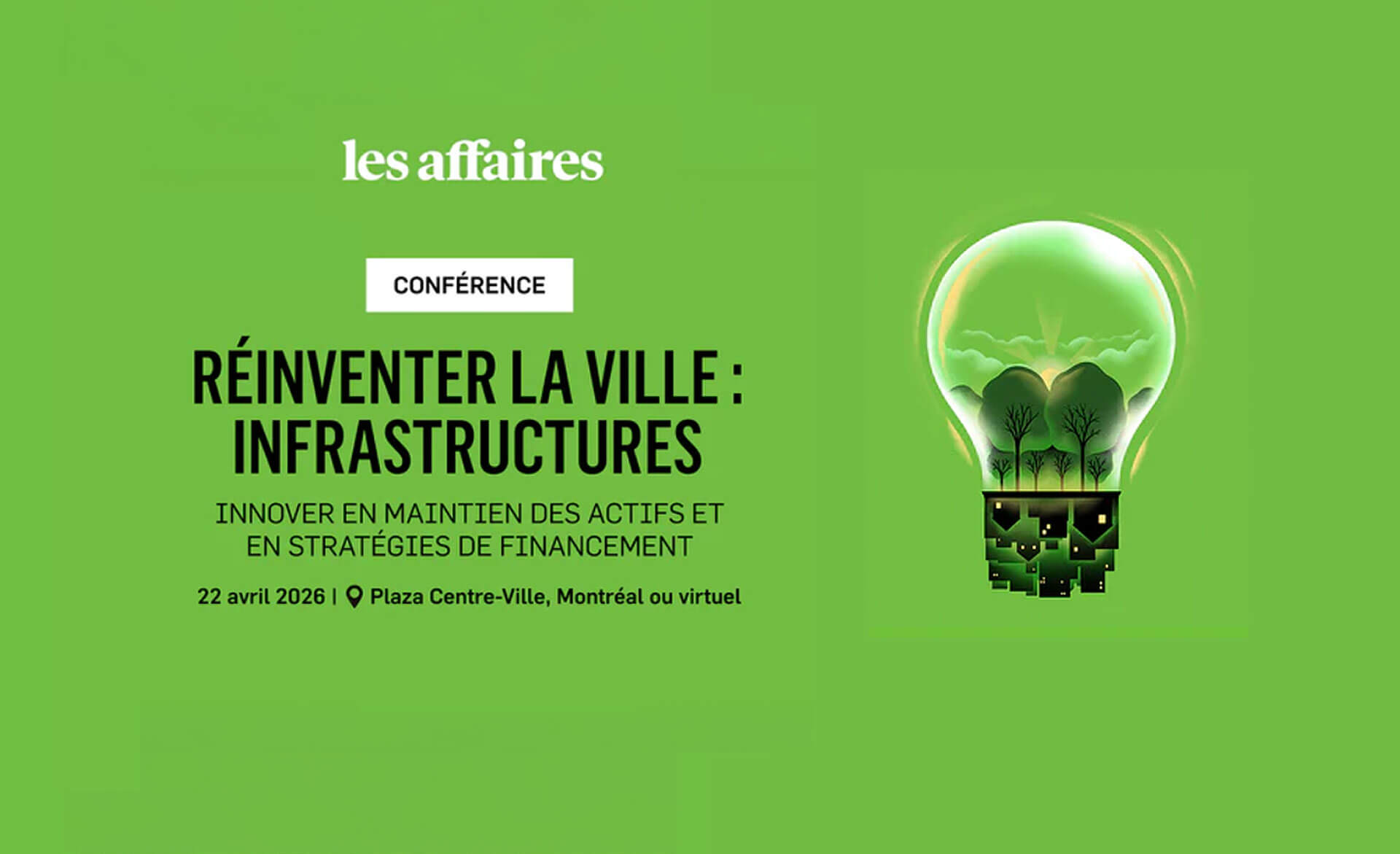
MCM attended the conférence Réinventer la ville : infrastructures, organized by Les Affaires, to listen to the challenges facing municipalities, understand field priorities, and validate how our solutions align with the recommendations put forward by the experts.
Here are the key takeaways that caught our attention.
“Encourage versatile infrastructure projects that deliver multiple benefits“
— Catherine Morency, Canadian Infrastructure Council
The Canadian Infrastructure Council calls for encouraging versatile projects capable of delivering multiple benefits at once. It highlights that significant opportunities exist to meet future needs with existing assets — particularly by strengthening asset management planning to improve climate resilience and reduce costs.
MCM’s Versatile Offering
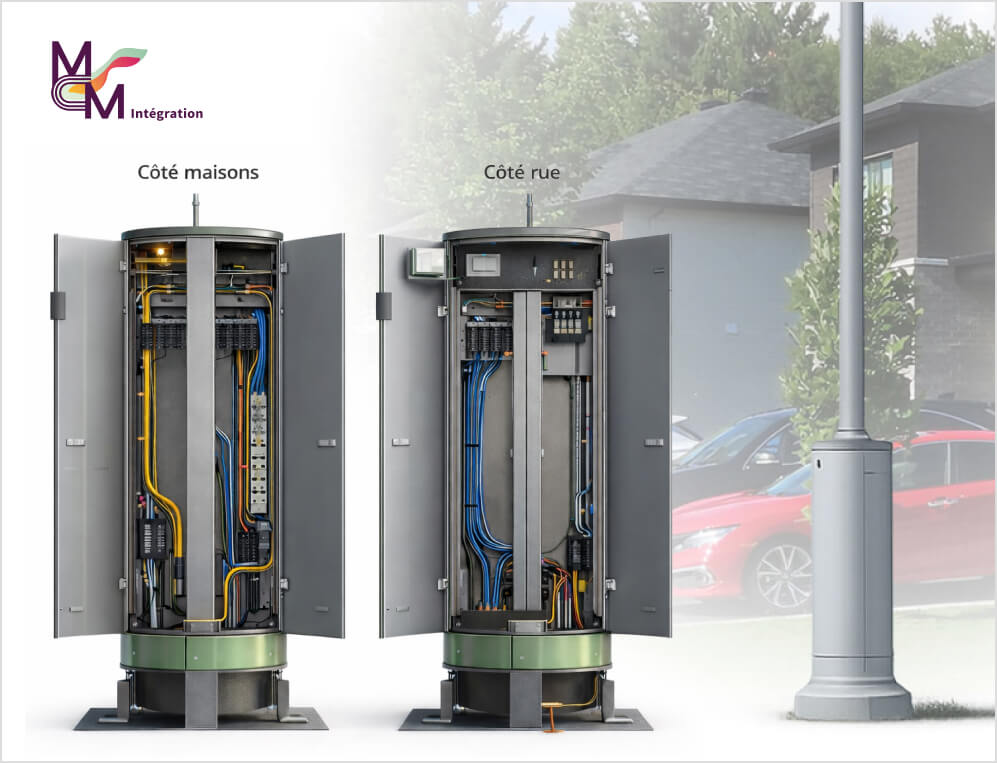
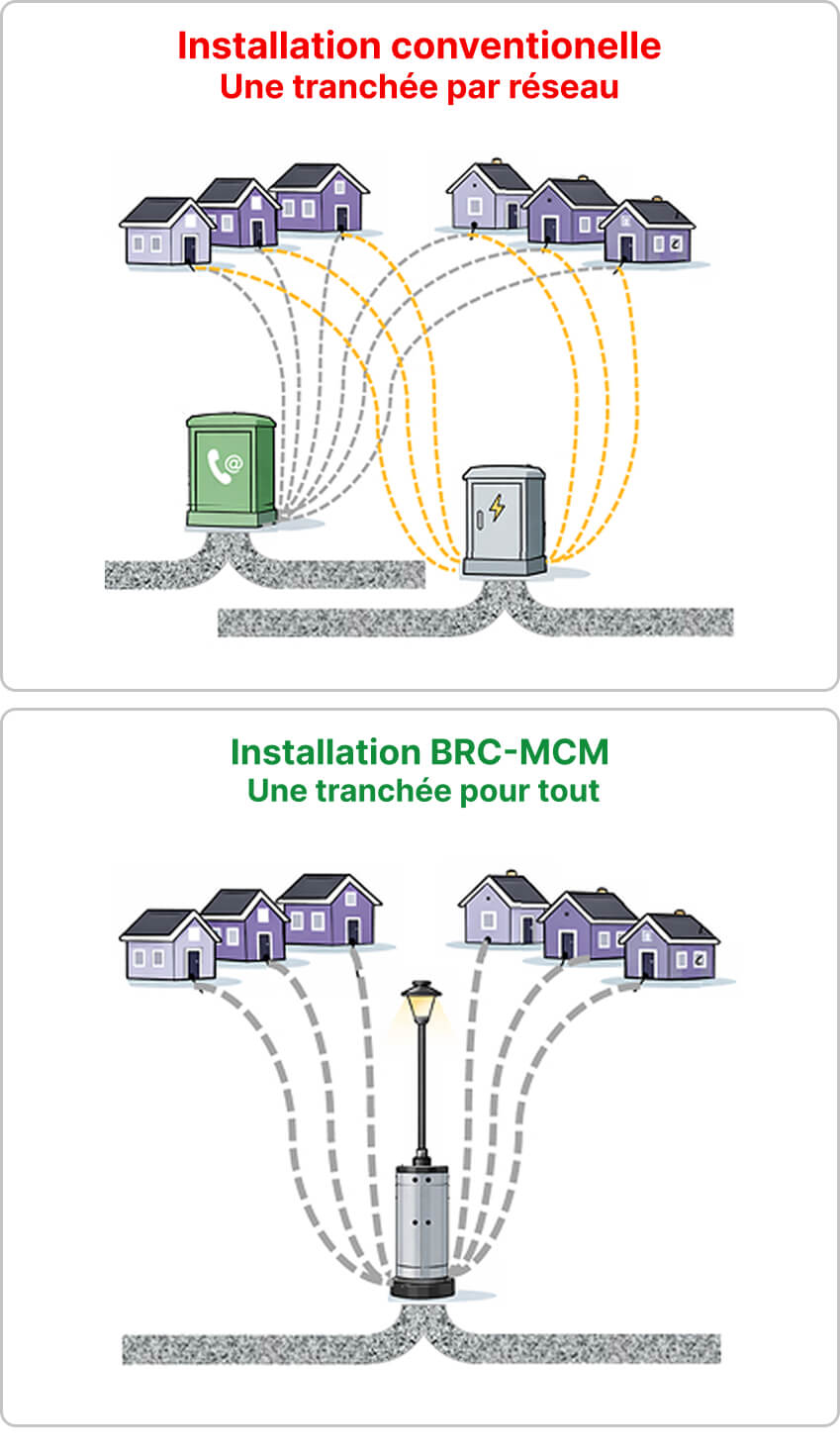
An MCM pedestal is a versatile solution that consolidates multiple network types into a single piece of equipment: electricity, telecommunications, cabling, and other technical connections. It enables municipalities to centralize several functions within one durable infrastructure integrated into urban street furniture — shifting from a logic of adding equipment to a logic of organizing networks.
“Design infrastructure to withstand future climate conditions and demographic changes”
— Catherine Morency, Canadian Infrastructure Council
Infrastructure can no longer be designed only for current needs. It must account for future climate conditions, demographic growth, and regional differences. The Council notes that its first National Infrastructure Assessment report focuses specifically on essential public infrastructure supporting access to housing, in a context where population growth and climate change are placing increasing pressure on these systems.
MCM: Robustness and Resilience
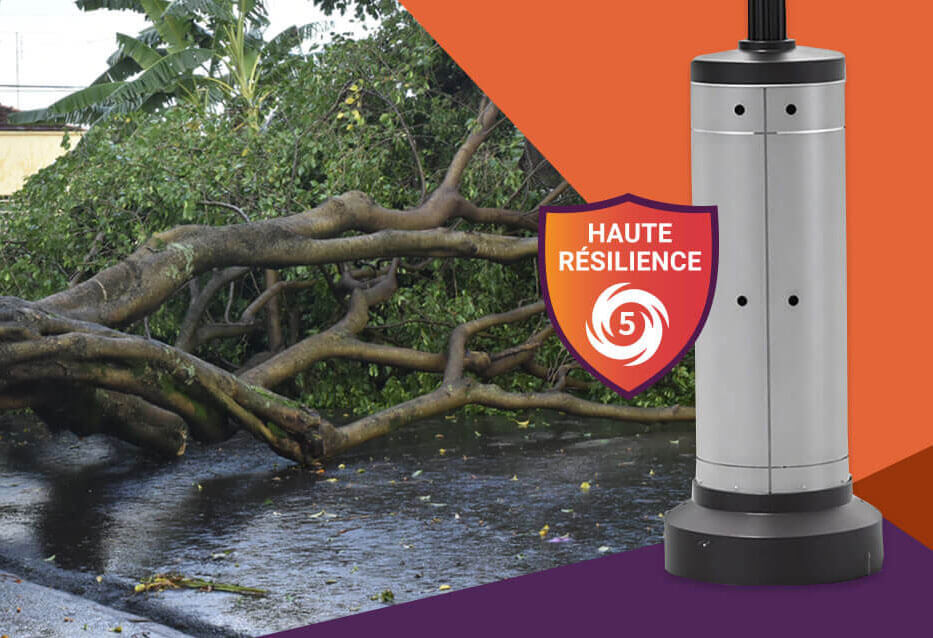
With densification, electrification, and the growth of telecommunications, urban networks will face increasing demand. Today’s equipment must be built to last. Designed to withstand impacts, harsh weather, and extreme climate conditions, MCM pedestals are certified to resist Category 5 hurricanes. By centralizing connections, they also make networks more organized and less vulnerable.
“$1 invested in preventive maintenance consistently avoids $10 in major repairs or reconstruction”
— Marc Didier Joseph, CERIU
This was arguably the most powerful statement of the conference. It captures in one sentence the importance of acting before problems escalate. CERIU emphasizes that proactive intervention means acting at the right time, maximizing asset lifespan, and avoiding far greater costs down the road.
MCM: A Prevention-First Approach
Better network planning from the start means avoiding costly interventions later.
By consolidating electricity and telecom in a single infrastructure, MCM pedestals simplify maintenance: less excavation, easier access, and less improvisation in the field. Designed to last 50 years without maintenance, they enable a 73% reduction in maintenance costs compared to conventional pedestals — equivalent to $2.2M in savings over 50 years for 100 pedestals.
MCM s’inscrit ainsi dans une logique de prévention — non seulement pour installer, mais pour mieux prévoir la durabilité et l’évolution des réseaux sur le long terme.
“Require long-term financial plans (10+ years) that include full asset lifecycle costs”
— École nationale d’administration publique
In a comparative report covering six public administrations — including Quebec, Ontario, Norway, and the United Kingdom — ENAP stresses that multi-year planning is essential to move beyond short-term management, better prioritize investments, and ensure continuity in public decision-making. The report also notes that unpredictability and budget instability are a major shared challenge across all administrations studied.
MCM: Thinking Long-Term
This recommendation directly reflects MCM’s approach: thinking beyond the immediate project when planning electrical, telecom, and technical networks — accounting for their lifespan, accessibility, maintenance needs, and future evolution. A more robust, better-integrated solution may represent a greater initial investment, but over time it reduces costs related to repairs, repeated interventions, and reorganization work.
Key Takeaways from MCM
These recommendations reinforce MCM’s vision: well-designed infrastructure doesn’t just respond to an immediate need. It must also facilitate maintenance, reduce future interventions, and support the evolution of networks over time.
In concrete terms, MCM pedestals make it possible to:
- Consolidate multiple networks into a single piece of equipment;
- Reduce the dispersion of enclosures in public spaces;
- Facilitate access to connections;
- Protect equipment against impacts and harsh weather;
- Better integrate technical infrastructure into urban street furniture;
- Support the gradual modernization of neighbourhoods;
- Reduce unplanned interventions and long-term costs.