We are certified ECOLEADERS -
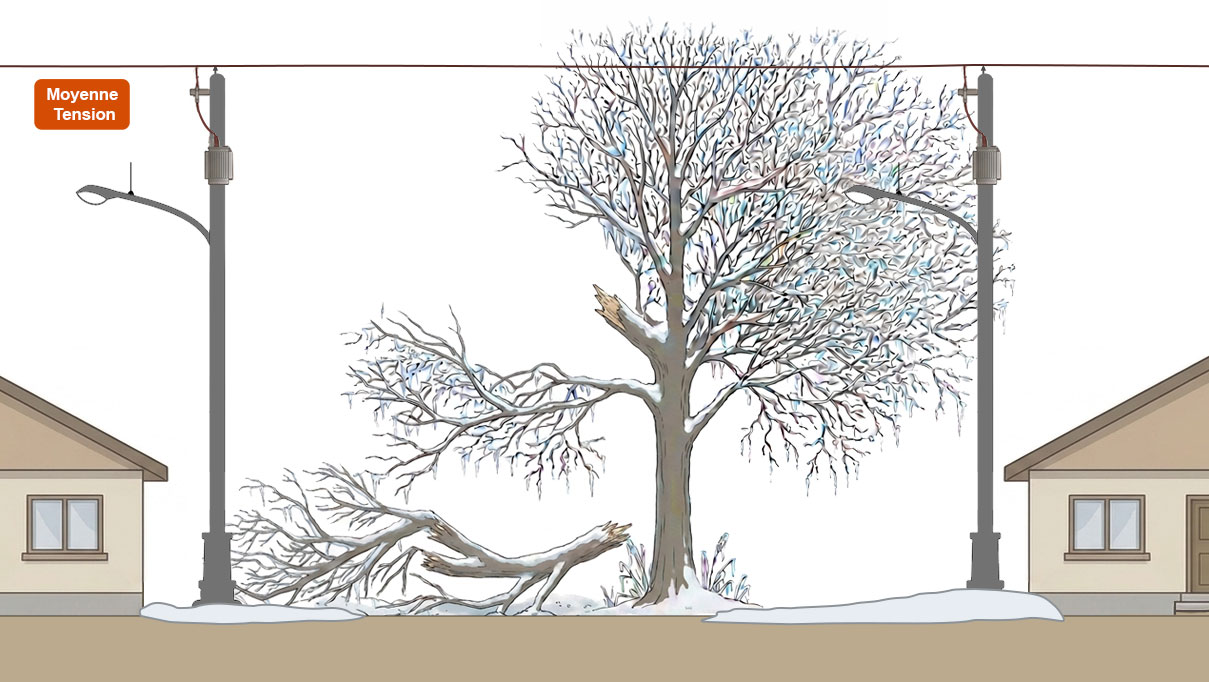
In Quebec, every ice storm or high-wind event is a reminder of just how exposed overhead networks are. A branch weighed down by ice breaks, and an entire row of homes loses electricity and Internet service.
For municipalities and electricity distributors, this means emergency interventions, often happening simultaneously and under difficult conditions. The hybrid network addresses the root cause: the position of utility lines in relation to tree branches.
In a Conventional Overhead Network: Three Networks, Three Levels
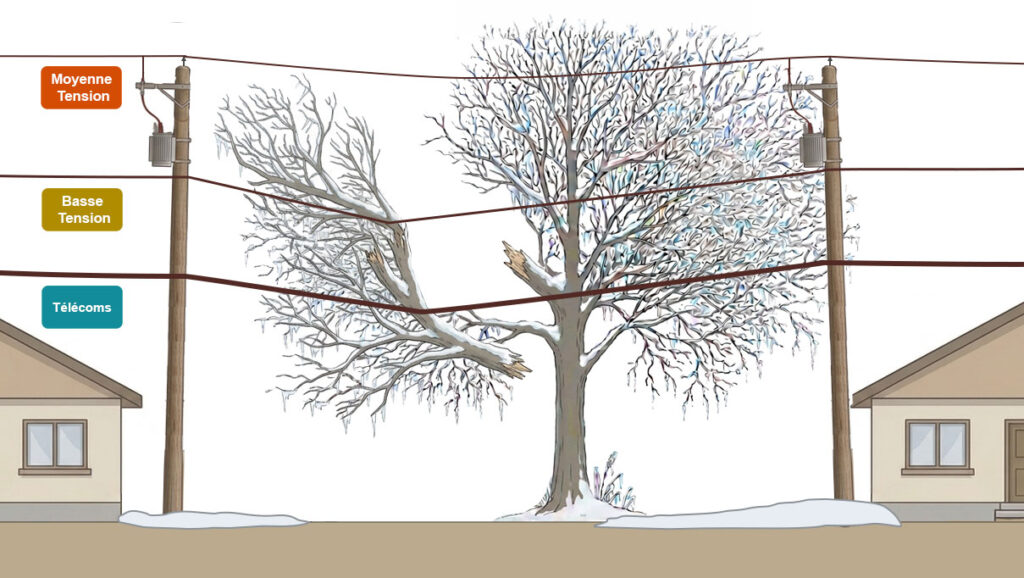
On a conventional utility pole, three networks are stacked vertically: medium-voltage lines at the very top, low-voltage lines slightly below, and telecommunications (telephone, cable and Internet) further down. The latter two run at mid-pole height, right where the large branches of street trees are typically found.
Large branches at mid-pole height can damage low-voltage and telecommunications lines, potentially causing service outages.
What Residents Experience
For residents, a service disruption isn’t a technical issue. It’s a cold home, interrupted remote work, a freezer to worry about, and sometimes downed wires right outside their door. And the municipality is often the first place they turn to for answers.
With a Hybrid Network: The Mid-Pole Zone Is Clear
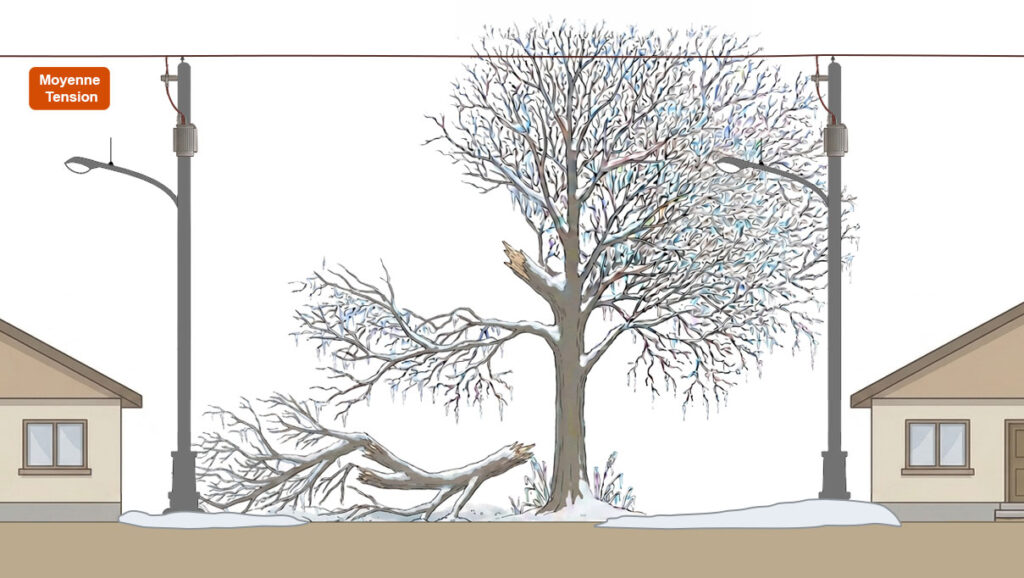
In a hybrid network, only the medium-voltage lines remain overhead, at the top of the pole. Low-voltage and telecommunications lines are buried underground, with their connections consolidated at the base of the pole. The zone where large branches typically extend is now free of wires. If a large branch falls at mid-pole height, it won’t damage any of these networks. It becomes debris to be cleared rather than a service outage to be repaired.
What This Means for Municipalities
● Fewer emergencies during storms. A branch falling at mid-pole height becomes a public works issue, not a widespread power outage.
● Better service for residents. Electricity and Internet service no longer depend on branches withstanding the weight of ice.
● A tangible argument for climate adaptation plans. Service reliability during extreme weather events can be incorporated into climate change adaptation and emergency preparedness plans.
What This Means for the Distribution Network
● Less damage caused by falling branches. Branches falling at mid-pole height, a common occurrence during ice storms, no longer affect the networks supplying buildings.
● Safer interventions. Fewer downed and damaged wires mean fewer hazardous situations for crews and the public.
● Protected connections. At the base of the pole, low-voltage and telecommunications connections are consolidated in a single piece of equipment designed to withstand impacts, water, snow and harsh weather conditions.
IN SUMMARY:
Conventional overhead network: Low-voltage and telecommunications lines run at mid-pole height, right where branches break. A falling branch can cause a service outage.
Hybrid network: Low-voltage and telecommunications lines are buried underground. A large branch falling at mid-pole height causes no damage to these networks. For municipalities and electricity distributors: less damage, fewer emergencies and more resilient streets.
Where Does the Project Stand?
The hybrid network is a research and development initiative by MCM Intégration. The concept is still being refined, and we are currently presenting it to municipal decision-makers and Hydro-Québec to validate its technical parameters with those responsible for managing public spaces and distribution networks on a daily basis.
Today, MCM supplies connection pedestals installed at the base of streetlights. Compliant with Hydro-Québec standard B.41.21, these pedestals already apply the same principle: consolidating connections in a single discreet, protected and accessible unit rather than distributing them throughout the street. The hybrid network takes this approach one step further, extending it to the utility pole itself.